
The 2027 Restaurant Technology Stack: Everything Working Together
Most restaurants do not have a technology problem. They have a connection problem. The website lives in one place, online orders arrive in another, the point-of-sale system keeps its own records, and the numbers that should explain the week are scattered across four logins nobody has time to open. A 2027 restaurant technology stack fixes that by treating those tools as one system instead of a pile of subscriptions: when a guest finds you, orders from you, pays you, and comes back, every step feeds the next one.
This is not about buying the newest gadget. It is about making the tools you already pay for share the same information, so your team spends less time retyping orders and guessing what worked.
What Your Restaurant Technology Stack Really Is
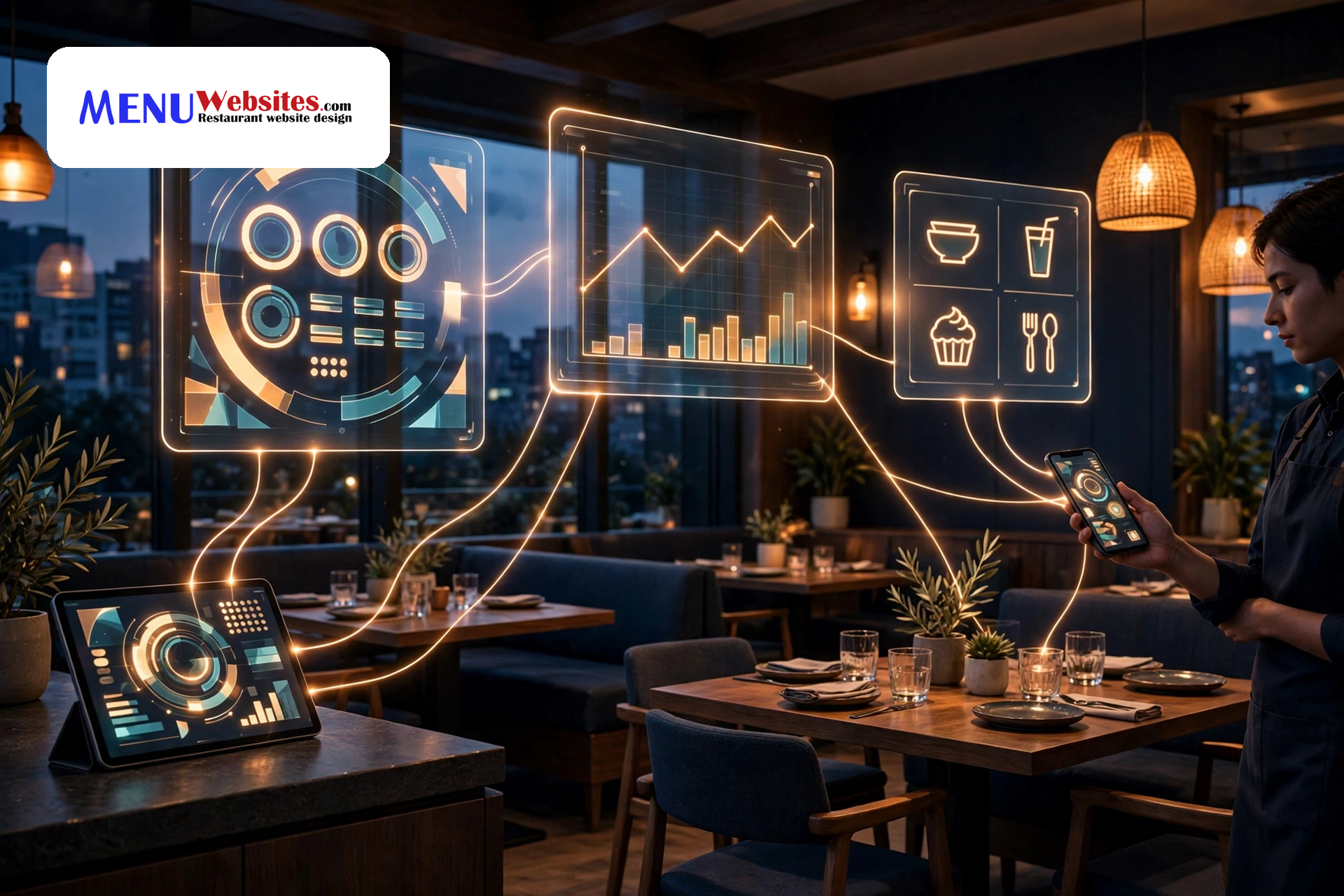
Think of your stack as the path a single order travels. A guest searches for dinner, lands on your website, places an order, and pays. The kitchen sees the ticket, the register records the sale, and the guest’s history updates so your next message to them is relevant instead of random. If any link in that chain breaks — the menu on your site does not match the kitchen’s menu, or an online order has to be typed into the register by hand — you pay for it in errors, delays, and lost information.
A stack is not a single product. It is a set of tools chosen to work together: a website built to sell, an ordering flow that sends tickets cleanly, a register that understands those tickets, a mobile option for regulars, and reporting that pulls it all into one view. The test is simple: does one change — a price update, a sold-out dish — ripple everywhere automatically? If not, you have a collection, not a stack.
The Five Layers of a Connected Stack
Every restaurant’s setup looks a little different, but the layers are almost always the same. Get these five right, in this order, and the rest gets much easier.
1. A website built to take orders, not just look pretty
Your website is the front door, and in 2027 it needs to do more than show photos and hours. Guests decide in seconds whether to stay, and usually on whether they can see the real menu, check prices, and start an order without friction. That is why a purpose-built restaurant website design matters more than a generic template: the menu, the ordering buttons, and the local search details are built around how hungry people actually behave on their phones.
2. Online ordering that belongs to you
Third-party marketplaces have their place, but orders placed through your own site cost less per order and come with the guest’s details attached. That matters twice over: you keep the margin that would go to commission, and you learn who your regulars are and what they order — information a marketplace keeps for itself.
3. A point-of-sale system that talks to ordering
This is the layer most restaurants get wrong. When online orders land in the register automatically, the kitchen gets one clean ticket stream and nobody retypes orders at a terminal. A proper POS system integration removes that double entry entirely, which means fewer wrong items, faster ticket times, and a closing routine that does not involve reconciling three different sales totals.
4. A mobile app for your regulars
Not every restaurant needs an app. But if much of your revenue comes from repeat orders — weekly regulars, families who order every Friday — a simple app earns its keep: one tap away, effortless reordering, and a natural home for loyalty rewards. If your regulars order that often, restaurant mobile apps are the layer that locks in that habit.
5. Reporting that tells you what to do next
Reports are only useful if they change a decision. A connected stack gives you one place to see which dishes sell, which hours are slow, and which guests have gone quiet. That is the difference between a spreadsheet you dread and restaurant analytics and reports you actually open on Monday morning. Good reporting does not just describe last week. It suggests this week’s move: promote the slow seller, staff up the busy hour, or send a win-back offer to guests you have not seen in a month.
How the Pieces Should Talk to Each Other
Picture a Friday night with a connected stack. A guest finds your site, sees the current menu with accurate prices, and places an order for pickup. The ticket flows straight to the kitchen display with the right modifiers, the register records the sale without anyone touching it, and the guest’s order history updates. On Monday, your report shows Friday’s best sellers, your average ticket by channel, and how many of those guests were first-timers.
Now picture the same night disconnected: someone retypes the ticket, the kitchen works from a second copy, and the register total at close does not match the online total. Same restaurant, same food — but one night ends with answers and the other with paperwork.
Building Your Stack in the Right Order
You do not need to replace everything at once. In fact, trying to is how restaurants end up with a bigger mess. Start with the layer that touches guests first, then work inward.
First, make sure your website and menu are accurate and easy to order from on a phone. If guests cannot complete an order smoothly, nothing downstream matters. Second, connect ordering to your point of sale so tickets flow cleanly. Third, tidy up your guest data: one list, no duplicates, with order history attached. Fourth, add the mobile or loyalty layer only once regulars have a reason to use it. Finally, set a weekly reporting habit — one short review, same time each week, where you pick a single action from the numbers.
At each step, ask the vendor one question before you sign: what does this connect to, and what breaks if I change another tool later? Tools that play well with others are worth more than longer feature lists, because your stack will change as your restaurant grows.
Measuring Your Restaurant Technology Stack
Once the pieces are connected, judge the stack by outcomes, not by how impressive the dashboard looks. Four numbers tell most of the story. First, order accuracy: how often do tickets come back or get remade? Second, ticket time from order to table or pickup, especially during the rush. Third, direct-order share: what portion of orders comes through channels you own, where you keep the margin and the guest relationship? Fourth, repeat rate: how many first-time guests come back within sixty days?
If accuracy improves, ticket times fall, direct share climbs, and repeat visits rise, the stack is working. If the numbers stay flat, the problem is usually a step nobody finished — a menu still out of sync, or a report nobody reads. Fix the step, not the tool.
Mistakes to Avoid When You Upgrade
The most common mistake is buying for features instead of for fit. A tool with fifty features you will never use is not better than a tool with ten you use daily. The second mistake is skipping staff training. A connected system only helps if the team trusts it; if servers keep a paper backup “just in case,” you are paying for two systems and getting the worse one. Train on the rush, not on a quiet afternoon, and let the team see the new flow handle a real peak before you declare it live.
The third mistake is ignoring the guest’s side. Every new step — an app download, an account creation — costs the guest effort. Keep the path to ordering short, and save the extras for after the first successful order.
The Payoff: A Restaurant That Runs on Answers
A connected 2027 restaurant technology stack will not cook the food or greet the guest. What it does is quieter and, over a year, more valuable: it stops the small leaks, gives every order one clean path from guest to kitchen to register, and turns last week’s service into next week’s plan. Owners who make that shift describe the same change in different words — fewer surprises at close, faster rushes, and marketing that finally has numbers behind it.
Start with one connection, not a full overhaul. Fix the handoff that frustrates your team most, prove it on a busy night, and build from there.
Related Resources
- Restaurant Website Design — a website built to turn searches into direct orders, with menus and ordering built in.
- POS System Integration — connects online ordering with your point of sale so tickets flow cleanly and totals reconcile.
- Restaurant Mobile Apps — a one-tap ordering app for regulars, with reordering and loyalty built in.
- Restaurant Analytics and Reports — one view of sales, channels, and guest behavior to guide each week’s decisions.