
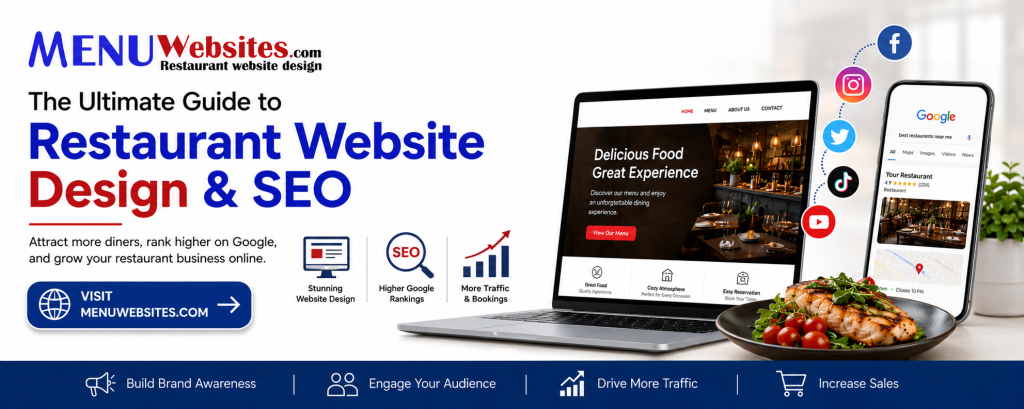
The Ultimate Guide to Restaurant Website Design & SEO explains the ultimate guide to restaurant website design seo for restaurants that want stronger visibility, better customer experience, and more direct online growth.
In today’s competitive market, your restaurant website is the first impression for most of your customers. Before choosing where to eat, people search for menus, hours, and photos. If your site is difficult to find or use, they will choose a competitor.
This comprehensive guide walks you through everything you need to know about creating a website that looks great, ranks well on Google, and converts visitors into paying customers.
Part 1: Understanding Restaurant Website Design Fundamentals
The Visual First Impression
Your website design must reflect the atmosphere of your restaurant. A fine dining establishment requires a different aesthetic than a casual taco shop. Key elements include:
-
High-quality food photography: Professional images of your signature dishes build immediate trust and appetite.
-
Consistent branding: Your logo, color scheme, and fonts should match your physical restaurant.
-
Clean layout: White space helps users focus on your menu and call-to-action buttons.
Mobile Responsiveness is Essential
Most local searches happen on smartphones. Your site must function perfectly on all devices. Buttons should be easy to tap, text should be readable without zooming, and load times must be fast.
Part 2: Step-by-Step Restaurant Website Development Process
Step 1: Choose Your Platform
You have several options for building your site:
-
Website Builders: Platforms like Wix and Squarespace offer restaurant-specific templates that are easy to customize without coding knowledge.
-
Restaurant-Specific Platforms: Services like BentoBox and Toast are built specifically for restaurants and include online ordering and table reservation features.
-
WordPress: For maximum control and advanced SEO capabilities, WordPress with a restaurant theme offers the most flexibility.
Step 2: Structure Your Pages
Every restaurant website needs these essential pages:
-
Homepage: Features your best photos, your name, location, and primary call-to-action.
-
Menu Page: Your most important page. Display your food and drink offerings clearly with categories and prices.
-
Contact Page: Includes your address, phone number, hours of operation, and a Google Map.
-
About Page: Tells your story, introduces your chef, and builds a personal connection with visitors.
-
Reservations / Online Ordering: A dedicated page or prominently linked section for bookings and takeout.
Step 3: Design Your Menu for the Web
Do not upload a PDF menu. Instead, create an HTML menu that:
-
Is easy to read on mobile devices
-
Allows Google to index your dishes and prices
-
Can be updated instantly when prices or items change
-
Highlights popular items, dietary options, and chef specials
Part 3: Restaurant SEO Strategies That Work
Local SEO: Getting Found in Your Neighborhood
Local search is the most powerful tool for restaurants. When someone searches “restaurants near me,” you want to appear at the top.
Google Business Profile Optimization
Your Google Business Profile is your most valuable SEO asset. Claim and verify your listing, then:
-
Add accurate business hours and update them for holidays
-
Upload fresh photos of your food and interior regularly
-
Respond to all customer reviews promptly
-
Post updates about special events and new menu items
Local Citations and Consistency
Ensure your Name, Address, and Phone number are identical across your website, Yelp, TripAdvisor, Facebook, and all other directories. Inconsistent information confuses both customers and search engines.
On-Page SEO for Restaurants
Each page on your website should be optimized for specific search terms.
Title Tags and Meta Descriptions
These appear in search results and determine whether users click your link.
-
Homepage Example: “Best Italian Restaurant in Chicago | Tony’s Trattoria”
-
Menu Page Example: “Dinner Menu | Authentic Italian Pasta & Seafood | Tony’s Trattoria”
-
Contact Page Example: “Hours & Location | Tony’s Trattoria Chicago”
Header Tags and Content Structure
Use H1 tags for page titles, H2 tags for section headings, and H3 tags for subsections. This helps Google understand your content hierarchy.
Image Optimization
Rename your image files descriptively before uploading. Use “wood-fired-margherita-pizza.jpg” instead of “IMG_4729.jpg.” Add alt text that describes the image and includes relevant keywords where natural.
Keyword Research for Restaurants
Understanding what potential customers type into Google helps you create relevant content.
-
Geographic keywords: Include your city, neighborhood, and nearby landmarks
-
Cuisine-specific terms: Italian, Mexican, sushi, vegan, gluten-free
-
Intent-based searches: “Romantic dinner spots,” “family-friendly restaurants,” “best brunch near me”
Part 4: Essential Features for Modern Restaurant Websites
Online Ordering Integration
Offering direct online ordering through your website reduces reliance on third-party delivery apps and keeps more profit in your pocket. Integrate with systems like Toast, ChowNow, or Uber Eats directly.
Table Reservation Systems
Make it easy for customers to book tables. Integrate with OpenTable, Resy, or a simple reservation plugin. Place the booking button prominently on every page.
Social Media Connection
Link to your active Instagram, Facebook, and TikTok accounts. Display your latest Instagram posts on your website to show real-time customer experiences and fresh content.
Email Newsletter Signup
Build a database of customer emails to announce happy hours, new menu items, and special events. Offer a discount or free appetizer as an incentive for signing up.
Part 5: Technical SEO and Website Performance
Site Speed Optimization
Google uses page speed as a ranking factor, and users abandon slow sites. Improve your load times by:
-
Compressing all images before uploading
-
Minimizing plugins and unnecessary code
-
Using a fast, reliable hosting provider
-
Enabling browser caching
Schema Markup for Restaurants
Schema is code that helps search engines understand your content and display rich results.
-
Restaurant schema: Identifies your business type
-
Menu schema: Helps Google display your dishes in search
-
Review schema: Shows star ratings in search results
-
Event schema: Promotes special dinners and holiday events
SSL Security
Ensure your website has an SSL certificate (HTTPS). This protects customer data and is a confirmed Google ranking factor.
Part 6: Content Marketing for Restaurants
Blogging for SEO
A blog allows you to target additional keywords and keep your website fresh. Consider posts about:
-
New menu items and seasonal specials
-
Behind-the-scenes looks at your kitchen
-
Chef interviews and stories
-
Local food scene involvement
-
Recipes and cooking tips
Video Content
Video engages visitors and increases time spent on your site. Share:
-
Cooking demonstrations
-
Restaurant tours
-
Customer testimonials
-
Event recaps
Part 7: Measuring Success with Analytics
Google Analytics Setup
Install Google Analytics to track:
-
How many people visit your site
-
Where they come from (Google, social media, direct)
-
Which pages they view most
-
How long they stay
-
What actions they take
Google Search Console
Submit your site to Google Search Console to monitor indexing status, search queries, and technical issues. This free tool alerts you to problems that could hurt your rankings.
Part 8: Common Restaurant Website Mistakes to Avoid
Mistake 1: Outdated Information
Nothing frustrates customers more than arriving to find your hours have changed or a dish is no longer available. Update your website immediately when anything changes.
Mistake 2: PDF Menus
PDFs are difficult to read on phones and invisible to search engines. Always use HTML text for your menu.
Mistake 3: No Call-to-Action
Every page should guide users toward an action: order online, book a table, or call for reservations.
Mistake 4: Ignoring Mobile Users
If your site doesn’t work perfectly on smartphones, you are losing the majority of potential customers.
Mistake 5: Slow Loading Speed
Large, unoptimized images and too many plugins will drive visitors away before they see your menu.
Part 9: Restaurant Website Design Trends for 2025
AI-Powered Personalization
Websites can now show different content based on time of day or user location. Morning visitors see breakfast items; evening visitors see dinner specials and reservation buttons.
Voice Search Optimization
With more people using voice assistants, optimize for conversational phrases like “Where can I get pizza near me open now?”
Video Backgrounds
Short, looping videos of sizzling dishes or bustling dining rooms create immediate engagement.
Dark Mode Compatibility
Many users prefer dark mode on their devices. Ensure your site looks great in both light and dark themes.
Minimalist Navigation
Clean, simple menus with fewer options help users find what they need faster.
Conclusion: Take Your Restaurant to the Next Level
Your restaurant website is one of your most powerful marketing tools. When designed well and optimized for search engines, it works 24 hours a day, attracting new customers and serving existing ones. From beautiful food photography to local SEO strategies, every element plays a role in your online success.
Whether you need a brand new website, SEO improvements, or ongoing social media management, professional help ensures you get results.
Ready to Grow Your Restaurant Business?
If you are interested in professional restaurant website design, restaurant SEO, or social media marketing for your establishment, we are here to help.
Our team specializes in creating beautiful, high-performing websites that rank on Google and convert visitors into loyal customers.
Call or Text us today: 626-679-1860
Email us: [email protected]
Let us handle your online presence so you can focus on what you do best: running a great restaurant.
Related restaurant growth services
Explore MenuWebsites.com services that connect with this article: